Logitech PRO X2 SUPERSTRIKE Review: Haptic Innovation Meets Competitive Gaming
Price last updated: Feb 16, 2026
Where to Buy
Pros
- ✓ Revolutionary HITS technology delivers 30ms faster click response times
- ✓ Ultra-lightweight at just 61g despite haptic hardware
- ✓ Industry-leading specs (44,000 DPI, 8000Hz polling, HERO 2 sensor)
- ✓ Extensive customization with 10 actuation levels and Rapid Trigger support
- ✓ 90-hour battery life with Powerplay 2 wireless charging compatibility
- ✓ Magnetic dongle storage and premium build quality
Cons
- ✗ Zero Linux support (no G Hub or Solaar compatibility)
- ✗ Premium pricing may not suit casual gamers
- ✗ Haptic feedback reduces battery life during intensive use
- ✗ No onboard DPI selector button
- ✗ ABS construction may show wear over extended use
Verdict: The fastest, most customizable gaming mouse available—if you're on Windows or macOS. Linux users should wait for software support.
Logitech PRO X2 SUPERSTRIKE: A Revolutionary Gaming Mouse Review
The Logitech PRO X2 SUPERSTRIKE represents a significant leap forward in gaming mouse technology, introducing haptic feedback to competitive gaming in a way that genuinely enhances performance rather than serving as a gimmick. Priced at €179.99 in the US and £159 in the UK, this wireless gaming mouse targets esports professionals and competitive enthusiasts who demand every possible advantage, offering what may be the fastest and most customizable clicking experience available today.
Haptic Inductive Trigger System (HITS): The Game-Changer
At the heart of the PRO X2 SUPERSTRIKE lies Logitech’s revolutionary Haptic Inductive Trigger System (HITS), which replaces traditional mechanical or optical microswitches with a combination of real-time haptics and inductive analog sensing. This technology delivers up to 30ms faster click response times compared to conventional gaming mice, a substantial improvement that dwarfs the gains from increasing polling rates from 1000Hz to 8000Hz.
The system works by reducing the actuation point from the typical 0.6mm found in traditional mice to just 0.1mm of travel distance. When the mouse is powered off, the buttons feel completely dead with no tactile feedback, but when activated, the haptic system creates a pronounced, natural-feeling click that’s both heard and felt. This isn’t pure haptics—the buttons still physically depress—but the haptic feedback provides the satisfying tactile response users expect while enabling unprecedented speed and customization.
Professional esports player Davey “Freq” Hendriks, who competes in Rainbow Six Siege, encapsulated the advantage perfectly: “When I’m getting faster response times, there’s no point going back”. The technology also supports Rapid Trigger functionality, typically found in high-end gaming keyboards, which allows clicks to activate and reset instantly for faster repeated inputs.
Performance Testing and Real-World Results
Independent testing demonstrates the tangible benefits of HITS technology. Using standardized CPS (clicks per second) tests, the PRO X2 SUPERSTRIKE achieved 10.2 CPS compared to 8.8 CPS on a standard gaming mouse—representing more than one full additional click per second. Professional gamers have pushed this even higher, achieving over 11.0 CPS with the device.
The mouse features Logitech’s HERO 2 sensor with a maximum DPI of 44,000, acceleration up to 88G, and tracking speeds up to 888 IPS (inches per second). The wireless Lightspeed connectivity supports polling rates up to 8000Hz (0.125ms response time), while wired connections operate at 1000Hz. These specifications place it among the highest-performing gaming mice available, surpassing even its predecessor, the Superlight 2, which maxed out at 32,000 DPI and 4000Hz polling.
In competitive gaming scenarios across titles like Overwatch, Counter-Strike, and Valorant, the mouse delivers exceptional precision and responsiveness. The combination of ultra-high DPI, rapid polling rates, and instantaneous click response enables pinpoint accuracy for both rapid-fire scenarios and precision sniping situations.
Design and Build Quality
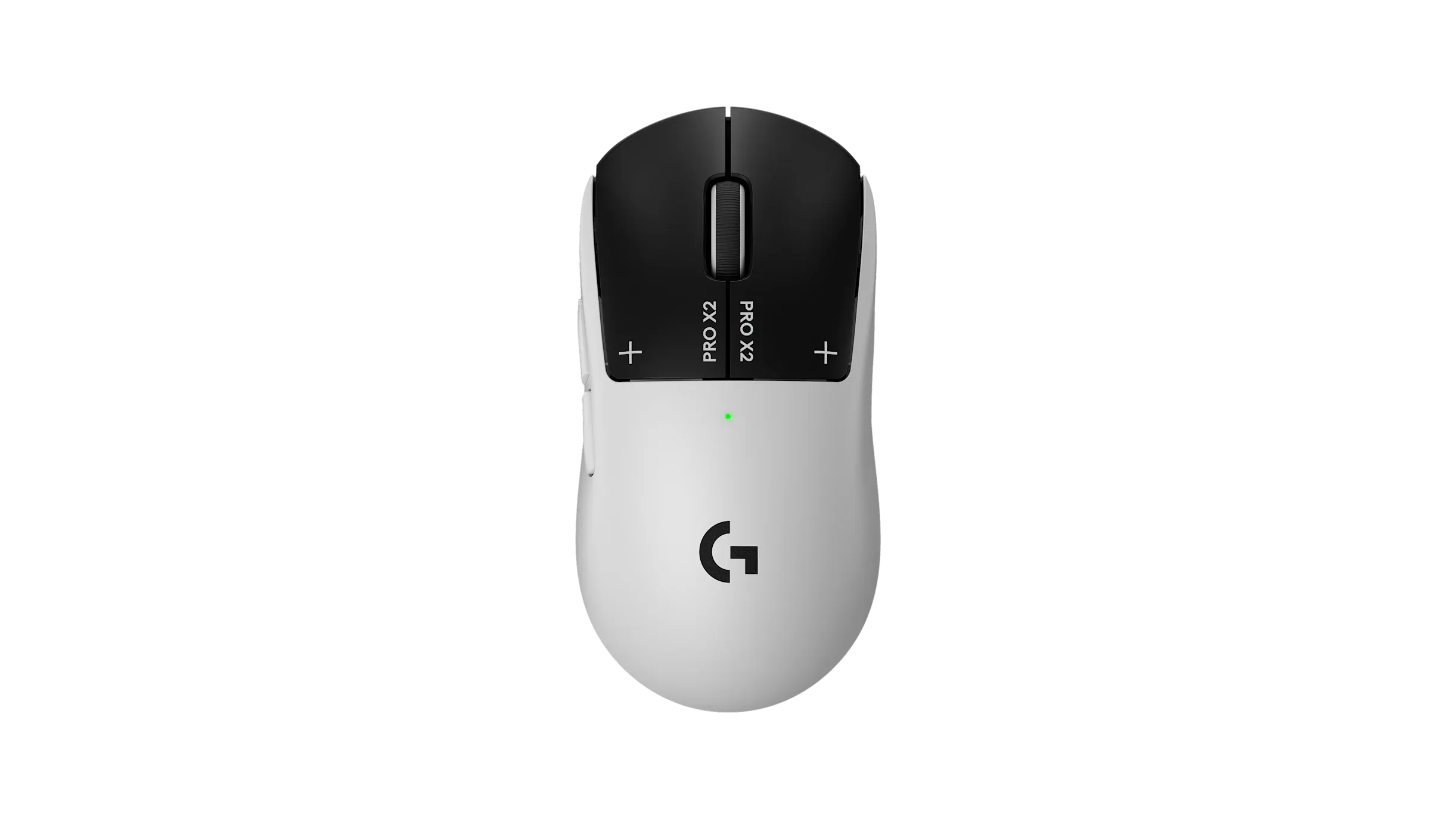
Logitech wisely retained the acclaimed design of the PRO X Superlight 2 after consulting with 40 professional and amateur gamers during development. The symmetrical, ambidextrous shape measures 4.72 x 2.57 x 1.53 inches and weighs just 61 grams, only one gram heavier than its predecessor despite the additional haptic hardware.
The lightweight construction required significant engineering innovation. To accommodate the Haptic Inductive Trigger System while maintaining competitive weight, Logitech implemented a thinner chassis and base plate, titanium screws, and a ventilated PCB. These measures trimmed 7 grams from the initial 68-gram prototype to achieve the final 61-gram weight.
The mouse features five programmable buttons: left and right clicks, two thumb buttons on the left side, and a clickable scroll wheel. High-quality PTFE feet provide smooth, low-friction gliding across mouse pads, and optional grip tape comes included in the box for users who prefer additional friction. The minimalist aesthetic eschews RGB lighting in favor of a single small LED indicator for battery status, reinforcing the professional, competition-focused design philosophy.
One particularly thoughtful design element is the magnetic dongle storage compartment on the underside of the mouse. This ensures the 2.4GHz USB-A Lightspeed wireless dongle (which includes a USB-C adapter) never gets lost when not in use—a feature absent from many competing wireless gaming mice.
Customization and Software
The Logitech G Hub software, compatible with both Windows and macOS, provides extensive customization options that fully leverage the HITS technology. Users can adjust DPI, polling rates, button remapping, and save up to five profiles directly to the mouse’s onboard memory.
The haptic system introduces unprecedented levels of click customization. Both left and right mouse buttons offer 10 levels of actuation point adjustment, allowing users to set extremely short clicks with minimal travel for rapid-fire situations or longer, more controlled clicks for precision aiming. The Rapid Trigger sensitivity provides five adjustment levels, enabling users to find the perfect balance of speed for their skill level and gameplay style.
Additionally, the haptic feedback intensity itself is adjustable across multiple levels, from subtle to pronounced. Users can even completely disable haptics to experience how dramatically the feedback enhances the clicking experience—with haptics off, the buttons feel lifeless despite still functioning normally. The software’s slider-based interface makes these adjustments intuitive, with each incremental change producing noticeable differences in feel and performance.
Battery Life and Connectivity
The PRO X2 SUPERSTRIKE delivers up to 90 hours of battery life on a single charge under optimal conditions at standard polling rates. However, real-world usage with haptics enabled reduces this figure. With haptic feedback intensity increased from level one to level five, battery life can decrease by up to seven hours, and higher click rates during intense gaming sessions further impact longevity.
The mouse charges via USB-C and is compatible with Logitech’s Powerplay 2 wireless charging mouse pad system (sold separately) for continuous power during use. Connectivity options include 2.4GHz Lightspeed wireless (with up to 8000Hz polling) and wired USB connection (at 1000Hz), with Bluetooth deliberately omitted to reduce weight and focus on competitive gaming priorities.
Linux Compatibility and Limitations
For Linux users, the PRO X2 SUPERSTRIKE presents significant limitations. Logitech’s G Hub software does not support Linux distributions, meaning users cannot access the extensive customization features that make this mouse special on Windows and macOS systems. According to official Logitech support, neither G Hub nor the Superstrike have been tested or designed for Linux compatibility.
The mouse will function as a basic input device on Linux distributions like Ubuntu and Arch Linux for standard work tasks. However, without G Hub access, users cannot adjust the actuation points, haptic feedback intensity, Rapid Trigger sensitivity, DPI settings, polling rates, or create custom button mappings. This severely diminishes the mouse’s value proposition, as these customization features justify its premium price.
Solaar, the popular open-source Linux utility for managing Logitech devices, currently does not support the PRO X2 SUPERSTRIKE. Solaar primarily works with Logitech devices using Unifying, Bolt, Lightspeed, or Nano receivers, as well as some USB and Bluetooth devices. While community members have suggested that support may eventually be added given the mouse’s prominence, no timeline exists for this functionality.
A workaround involves maintaining a small Windows partition or virtual machine with USB passthrough to configure the mouse initially. Once configured, settings are saved to the mouse’s onboard memory profiles, allowing users to switch between up to five different configurations without G Hub access. This approach requires configuring all desired profiles in advance on Windows before returning to Linux for regular use. While functional, this solution is cumbersome and prevents on-the-fly adjustments that competitive gamers often require.
For Linux gamers and professionals who refuse to maintain Windows installations, the PRO X2 SUPERSTRIKE cannot be recommended despite its excellent hardware. Users should either wait for Solaar support to materialize or consider alternative gaming mice with established Linux compatibility.
Value Proposition and Target Audience
At €179.99 / £159, the PRO X2 SUPERSTRIKE matches the pricing of its predecessor, the Superlight 2, while adding HITS technology and Rapid Trigger support. This represents good value for those upgrading from the Superlight 2, but the price remains substantially higher than excellent alternatives like the Keychron M3 Mini V2 8K (€69), NZXT Lift Elite Wireless (€79), and numerous other capable gaming mice under €100.
The mouse is explicitly designed for competitive esports players and tournament-level gaming. Casual gamers may not perceive significant benefits from the faster click speeds, as winning matches ultimately depends on player skill, reaction time, and game knowledge rather than equipment alone. One reviewer noted still losing quickdraw confrontations in Valorant despite the mouse’s advantages.
However, for competitive players seeking every possible edge, the 30ms latency reduction and customizable actuation points can make meaningful differences in high-stakes scenarios. The technology closes the gap between player intention and in-game action, potentially determining winners in the split-second encounters that define competitive shooters like Counter-Strike, Overwatch, and Rainbow Six Siege.
Pros and Cons
Advantages:
- Revolutionary HITS technology delivers genuinely faster, more customizable clicks
- Excellent build quality with lightweight, premium materials at just 61 grams
- Industry-leading specifications: 44,000 DPI, 8000Hz polling, HERO 2 sensor
- Extensive customization through intuitive G Hub software
- 90-hour battery life with quick USB-C charging and Powerplay 2 compatibility
- Magnetic dongle storage prevents loss of wireless receiver
- Comfortable, proven ambidextrous design suitable for multiple grip styles
Disadvantages:
- Premium pricing at €179.99 / £159 may exceed budgets for casual gamers
- No Linux support through G Hub; Solaar compatibility not yet available
- Casual players may not fully utilize or benefit from advanced features
- No onboard DPI selector button for quick adjustments
- Haptic feedback increases power consumption, reducing battery life during intensive use
- Currently limited availability, with shipping beginning March 2026 in some regions
Final Verdict
The Logitech PRO X2 SUPERSTRIKE successfully pushes gaming mouse technology forward through intelligent application of haptic feedback. Rather than using haptics as immersive gimmickry, Logitech engineered a system that delivers measurable performance improvements while maintaining the familiar feel and control users expect. The ability to reduce click latency by up to 30ms while offering unprecedented customization of actuation points and trigger sensitivity represents a genuine competitive advantage for serious players.
For Windows and macOS users engaged in competitive gaming—particularly in first-person shooters and fast-paced multiplayer titles—this mouse justifies its premium pricing through superior performance and build quality. The combination of HITS technology, top-tier specifications, lightweight design, and extensive software customization makes it currently one of the best wireless gaming mice available.
However, the complete absence of Linux support severely limits its appeal to that community. Without access to G Hub or Solaar compatibility, Linux users cannot access the customization features that define this mouse, reducing it to an expensive basic input device. Until proper Linux support materializes, users of that platform should look elsewhere.
For competitive gamers on supported platforms who demand the absolute best tools for their craft, the PRO X2 SUPERSTRIKE delivers on its ambitious promises. It represents the next evolution in gaming mouse technology, and as professional players increasingly adopt it, the HITS system may well become the new standard that competitors must match.